
Choosing the right aluminium sheet thickness is essential for achieving the right balance of strength, weight, durability, workability and cost. The thickness selected can affect how easily the material can be cut, bent and formed, as well as how well the finished component performs in its intended application. Material that is too thin may flex or dent easily, while an unnecessarily thick sheet can add weight, increase costs and make fabrication more difficult.
Extal supplies aluminium products for a range of fabrication and construction requirements, helping projects select materials suited to their intended use. For those comparing aluminium suppliers in Sydney, understanding how sheet thickness relates to panel size, load, fabrication method and finish can make material selection more straightforward.
This guide explores common aluminium sheet thicknesses and how they suit architectural panels, enclosures, brackets, cladding and general fabrication. It also considers the relationship between thickness, strength, weight, formability and cost to help identify a practical sheet specification for different project requirements.
Common Aluminium Sheet Thicknesses Used in Fabrication
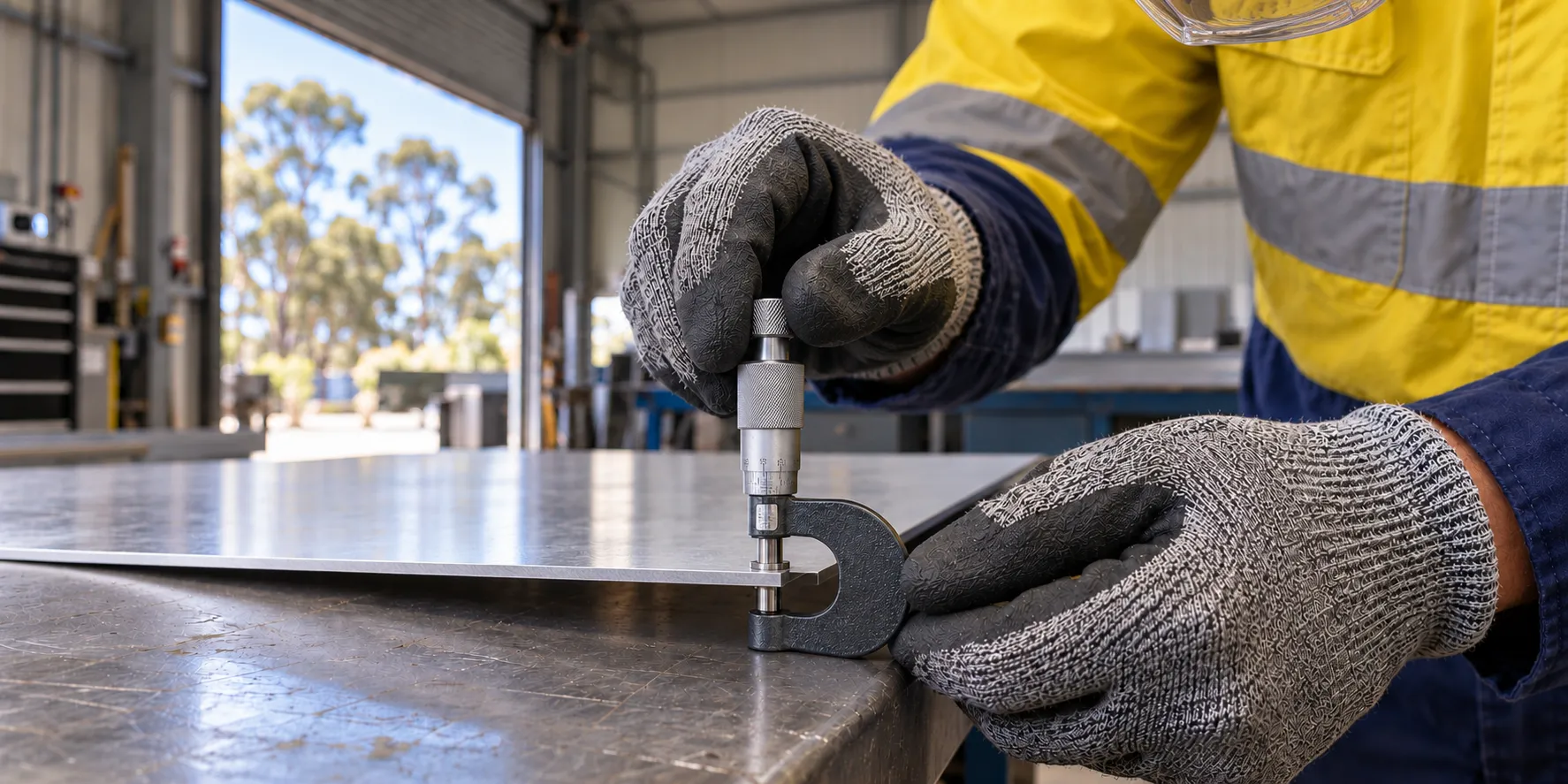
Choosing the right aluminium sheet thickness involves balancing strength, weight, formability and cost for the intended application. Common thickness ranges are widely used in fabrication because they offer practical combinations of rigidity, workability and material efficiency.
The most suitable range depends on factors such as the component's size, expected loads, fabrication method and required finish. The following thickness ranges provide a useful starting point when selecting aluminium sheet for different applications.
Thin Sheet: 0.5 mm to 1.5 mm
Aluminium sheet from 0.5 mm to 1.5 mm is suited to lightweight applications where loads and impact are limited. It is relatively easy to cut, punch and form, making it suitable for detailed folds and lighter fabrication work.
Common applications include decorative cladding, internal panels, signage trays, light ducting, covers and protective guards. Larger flat panels may require folded edges, returns or stiffeners to reduce vibration, flexing and oil canning.
Medium Sheet: 2 mm to 3 mm
The 2 mm to 3 mm range is commonly used for aluminium fabrication because it provides a good balance of strength, rigidity and workability. It can be cut, folded and welded using standard fabrication equipment while remaining relatively easy to handle.
Typical applications include machine guards, enclosures, control cabinets, vehicle panels, external fascias and moderate-duty brackets. This thickness range also provides better resistance to denting and deformation than a thinner sheet.
Heavy Sheet: 4 mm to 6 mm and Above
Aluminium sheet from around 4 mm, with thicker material often classified as plate, is selected where greater rigidity, impact resistance or load-bearing capacity is required. Larger thicknesses can also be useful for components with long unsupported spans or concentrated loads.
Common applications include platforms, ramps, structural panels, heavy-duty brackets, marine fabrications and vehicle components. Thicker material is heavier and may require more specialised cutting, handling and welding equipment, but its increased stiffness can reduce the need for additional framing.
Aluminium sheet from 0.5 mm to 1.5 mm suits lightweight applications, 2 mm to 3 mm provides a practical balance for general fabrication and 4 mm and above is better suited to heavier-duty requirements. The final thickness should be selected based on the component's size, expected loads, fabrication method and required level of rigidity.
How Load, Strength and Rigidity Affect Sheet Thickness
Load, strength and rigidity all influence the aluminium sheet thickness required for a fabrication project. The selected thickness needs to support the expected forces while limiting excessive bending, vibration and deflection during use.
The appropriate thickness depends on how the component is supported, the size of the unsupported span and whether it will experience static, dynamic or concentrated loads. Alloy selection also plays a role, as stronger aluminium grades can provide greater load capacity without always requiring a significant increase in thickness.
Load and Strength Requirements
The type and intensity of the load should be considered before selecting a sheet thickness. Static loads may allow for thinner sheets where support spacing is close. Dynamic or impact loads require greater strength and resistance to permanent deformation.
Point loads can be demanding because force is concentrated over a small area, increasing the risk of denting or local buckling. A thicker sheet, additional supports or local reinforcement may be required in these situations.
Aluminium alloy and temper should also be considered alongside thickness. A stronger alloy may allow a thinner sheet to meet certain strength requirements, although thickness may still need to be increased to achieve the required rigidity and resistance to denting.
Rigidity and Deflection
Rigidity determines how well the sheet resists bending and deflection. A component can have sufficient strength to avoid failure but still flex too much for the intended application, particularly where a flat appearance, accurate alignment or solid feel is important.
Increasing thickness improves stiffness, while reducing the unsupported span can also limit deflection. Folded edges, returns, ribs and other stiffening features can provide additional rigidity without increasing the thickness across the entire component.
For applications like architectural panels, machine guards, enclosures and platforms, thickness should be selected based on the expected load and the acceptable level of flex or deflection.
How Sheet Thickness Affects Cutting, Bending and Welding
Sheet thickness affects how aluminium can be cut, bent and welded, as well as the quality and consistency of the finished component. The selected thickness should suit the fabrication process and the requirements of the finished application.
Thinner sheet is easier to cut and form but can be more prone to distortion, while thicker material requires greater cutting force, larger bend radii and more controlled welding. Selecting a suitable thickness can help achieve consistent results while avoiding unnecessary fabrication difficulties and costs.
Cutting
Aluminium sheet thickness affects cutting speed, edge quality and the equipment required. Sheets from around 0.5 mm to 2 mm can be cut efficiently using processes such as laser cutting, guillotine shearing and punching.
As thickness increases, cutting speeds may reduce and more powerful equipment may be required. Larger thicknesses can also require greater care to maintain edge quality and dimensional accuracy on large components.
Bending
Thinner aluminium sheet is easier to form and can accommodate tighter bends, although it may be more susceptible to marking, wrinkling and distortion. Sheets around 2 mm to 4 mm often provide a useful balance between formability and rigidity for general fabrication.
As thickness increases, bending requires greater press-brake force and larger internal bend radii. The aluminium alloy and temper also affect how readily the material can be formed, so tooling and bend allowances should be considered before fabrication.
Welding
Sheet thickness also affects heat control and the risk of distortion during welding. Very thin aluminium can be more susceptible to burn-through and warping, while medium thicknesses around 2 mm to 4 mm are more forgiving for common MIG and TIG welding applications.
A thicker sheet requires greater heat input and may require multiple passes to achieve the required joint strength and penetration. Welding sequence, fixturing and heat management become important as material thickness increases.
Aluminium sheet thickness affects the equipment, tooling and techniques required for cutting, bending and welding. Selecting a thickness that matches the fabrication process and the intended application can help improve accuracy, minimise distortion and achieve a more consistent finished result.
How Aluminium Grade Influences Thickness Selection
Aluminium grade influences how much thickness is needed to achieve the required strength, formability and durability. Different alloys and tempers have different mechanical properties, so the appropriate thickness can vary even when two components have the same purpose.
The Australian Aluminium Council provides further technical guidance on rolled aluminium products, including aluminium sheet, coil and plate.
A stronger grade may allow a thinner sheet in some load-bearing applications, while a more formable grade may be preferable where tight bends are required. The service environment should also be considered for components exposed to moisture, chemicals or coastal conditions.
- Strength and formability: Higher-strength alloys (6061-T6 and 6082-T6) can provide greater load capacity than softer grades (1050, 3003 and 5005), potentially allowing thinner sheets custom-fabricated to be used. However, softer and more ductile grades can accommodate tighter bends, while harder tempers may require larger bend radii to reduce the risk of cracking.
- Service conditions and corrosion: Alloys (5083 and 5754) are commonly selected for applications requiring good corrosion resistance. The final thickness should still account for expected loads, span and service conditions, while an appropriate alloy and surface finish can improve durability without unnecessarily increasing material thickness. Where aluminium will contact dissimilar metals or remain exposed to moisture, the design should also account for the risk of galvanic corrosion.
Aluminium grade and temper should be considered alongside thickness to achieve the required balance of strength, formability and durability. Selecting the appropriate combination can help avoid unnecessary material weight while ensuring the finished component is suitable for its intended application and service environment.
What Aluminium Sheet Thickness Is Best for Different Fabrication Applications?
The best aluminium sheet thickness depends on the application, the expected loads, the size of the component and the fabrication processes required. While there is no single thickness suitable for every project, common applications tend to fall within certain ranges.
Architectural Panels and Cladding
Architectural panels, decorative cladding and fascia components commonly use aluminium sheet around 1.5 mm to 3 mm thick. Thinner material can be suitable for lightweight internal or decorative panels, while 2 mm to 3 mm provides greater rigidity for larger exposed surfaces and helps reduce denting and visible flex.
Australian Government guidance on cladding systems also outlines aluminium sheet and panel options, protective finishes and durability considerations.
Enclosures, Cabinets and Guards
Machine enclosures, control cabinets, covers and guards are often fabricated from approximately 2 mm to 3 mm aluminium sheet. This range provides a practical balance between rigidity, weight and ease of cutting, folding and welding. Larger enclosures or components exposed to impact may require thicker sheet or additional stiffening.
Brackets and Structural Components
Brackets, supports and other load-bearing components require around 3 mm to 6 mm or more, depending on the load, span, fixing method and aluminium grade. Higher-strength alloys may allow a thinner section where the design permits, while concentrated loads or unsupported spans may require additional thickness or reinforcement.
General Fabrication and Custom Components
For general fabrication, 2 mm to 4 mm is often a versatile range. It can be used for trays, panels, equipment components, vehicle parts and custom-fabricated sections while remaining relatively easy to cut, bend and weld. The final thickness should still be determined by the component's intended use rather than selecting a standard gauge automatically.
Projects involving vehicle components can also refer to our guide on selecting aluminium for trailers and ute trays.
Heavy-Duty and High-Impact Applications
Platforms, ramps, marine fabrications, heavy vehicle components and other applications exposed to substantial loads or repeated impacts may require 4 mm to 6 mm or thicker aluminium. At these thicknesses, the material provides greater rigidity and resistance to deformation, although heavier material can increase handling, cutting and fabrication requirements.
The required application, alloy, sheet size and fabrication method should be considered together when selecting thickness. A fabricator or supplier can help identify a suitable material specification where load requirements, bend geometry or service conditions make the choice less straightforward.
How Do Sheet Size and Panel Dimensions Affect Thickness Selection?
Sheet size and panel dimensions can affect the thickness required to maintain adequate rigidity. Larger panels have greater unsupported areas, making them more susceptible to flexing, vibration and visible distortion than smaller panels of the same thickness.
Thickness should be considered alongside the panel's dimensions, support spacing and fixing arrangement. Providing these details can help identify whether a thicker sheet or additional stiffening is more suitable.
- Panel size: Larger panels may require thicker sheets to reduce deflection, vibration and denting. A 2 mm sheet may be suitable for a small enclosure but too flexible across a larger opening.
- Support spacing: Closely spaced supports can reduce deflection and allow a thinner sheet to be used, while larger unsupported spans may require greater thickness or additional reinforcement.
- Panel shape: Long or narrow panels can behave differently from compact panels of the same area, depending on their fixing points and unsupported spans.
- Stiffening features: Folded edges, return flanges and ribs can improve rigidity without increasing the thickness across the entire panel, helping control weight and material costs.
Sheet thickness should be selected in relation to the panel's size, shape and support arrangement rather than dimensions alone. For larger or less-supported panels, a thicker sheet or suitable stiffening feature can provide the required rigidity without unnecessarily increasing material weight.
How Aluminium Sheet Thickness Affects Weight and Material Costs?
Aluminium sheet thickness directly affects material weight and cost. For sheets with the same alloy and dimensions, a thicker sheet contains more aluminium, making it heavier and more expensive. The difference becomes more significant for large panels or projects requiring multiple sheets.
Thicker material can also increase handling and fabrication costs because heavier components may require more effort to transport and install, while thicker sheets can require greater cutting, bending and welding capacity. However, choosing a thicker sheet can sometimes reduce the need for additional framing, stiffeners or reinforcement, which may offset some of the added material cost.
The most practical thickness is therefore one that provides the required strength and rigidity without adding unnecessary weight or material. When comparing options, the overall project cost should account for sheet thickness, alloy, dimensions, fabrication requirements, handling and any additional reinforcement.
What Thickness Is Suitable for Aluminium Panels and Enclosures?
Aluminium panels and enclosures are commonly fabricated from around 1.5 mm to 3 mm sheet, depending on their size, support arrangement, required rigidity and exposure to impact. Around 1.5 mm can suit smaller or lightweight panels, while 2 mm to 3 mm provides greater resistance to flexing, vibration and denting across larger surfaces.
For enclosures, cabinets, covers and machine guards, 2 mm is often suitable for general-purpose applications with limited unsupported spans. Around 3 mm may be more appropriate for larger enclosures, doors or covers that require additional rigidity, although folded edges, return flanges and internal stiffeners can also improve rigidity without increasing the thickness of the entire enclosure.
The final thickness should be selected according to the panel or enclosure dimensions, expected loads, support spacing, aluminium grade and fabrication method. Providing these details can help determine whether 1.5 mm, 2 mm, 3 mm or a thicker sheet is appropriate.
How Surface Finish and Appearance Affect Aluminium Sheet Selection?
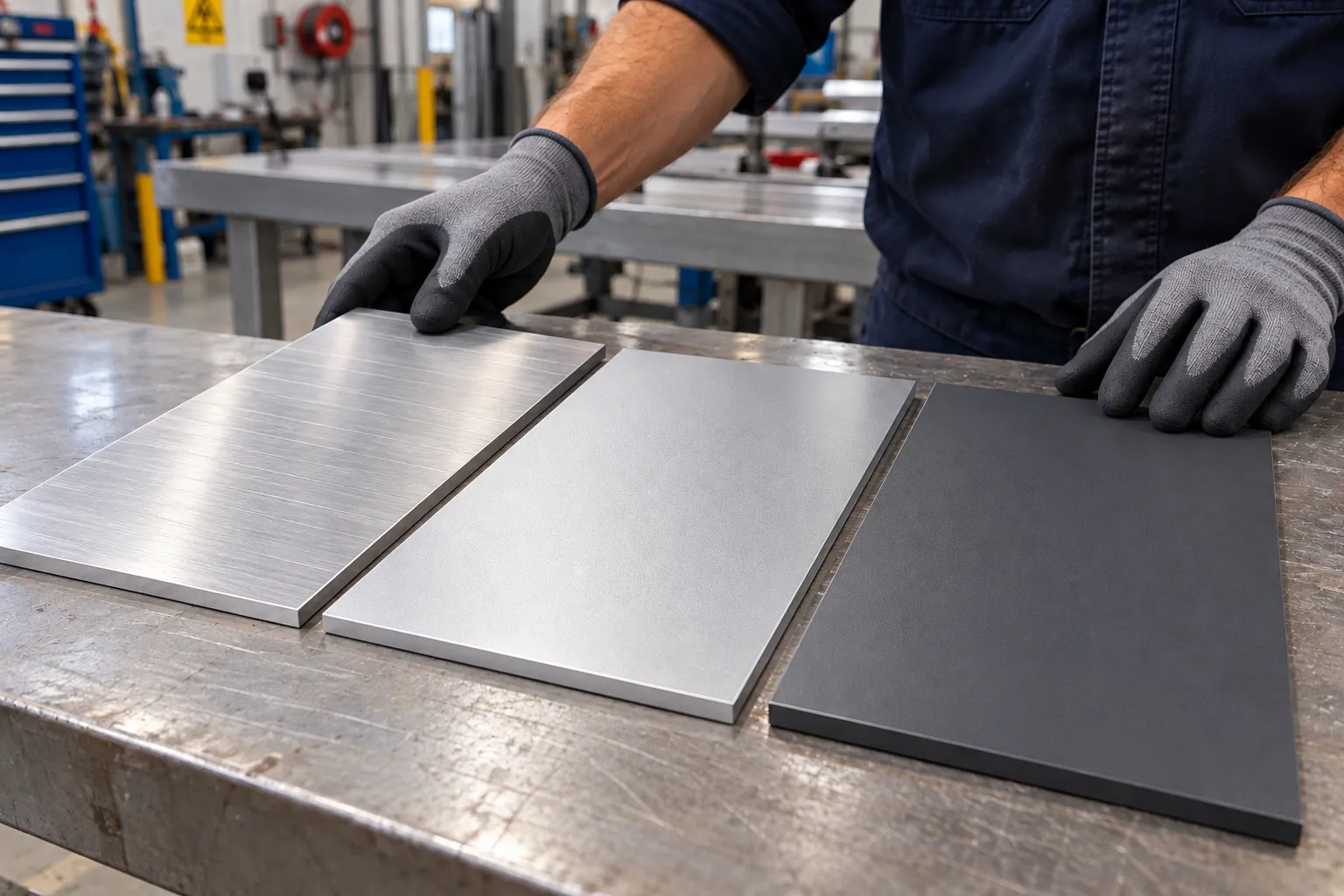
Surface finish and appearance should be considered when selecting aluminium sheet for visible components such as architectural panels, fascias, enclosures and decorative features. The required finish can influence the suitable alloy, temper, surface condition and thickness.
Match the Required Finish
Mill finish, anodised, painted and powder-coated aluminium can provide different appearances and levels of surface protection. The aluminium grade should be compatible with the selected finishing process, where a consistent colour or surface appearance is required.
Consider Surface Condition
Visible sheet should have a consistent surface with minimal scratches, dents and other imperfections before finishing. Fabrication processes can also affect the final appearance, so the material and fabrication sequence should be considered together.
Consider Thickness and Appearance
Thickness can affect how a finished panel looks across large flat surfaces. Very thin sheet may be more prone to dents, vibration, rippling and oil canning, while thicker sheet or suitable stiffening features can help maintain a flatter appearance.
The required finish should be specified alongside the alloy, temper, thickness and sheet dimensions to ensure the material is suitable for fabrication and the desired final appearance.
What Should Be Considered When Ordering Aluminium Sheet for Fabrication?
Ordering aluminium sheet requires more than selecting a thickness. The alloy, temper, dimensions, quantity, surface finish and intended fabrication processes should all be confirmed to ensure the material is suitable for the finished component.
Confirm the Material Specification
The alloy, temper and thickness should match the required strength, formability, corrosion resistance and fabrication method. Standard stock thicknesses and grades may also be preferable where they meet the project requirements, as they can be easier to source and may reduce lead times.
Check Sheet Size and Quantity
Sheet dimensions should suit the component design and cutting layout to minimise joins and material waste. The required quantity should also allow for cutting allowances, trial pieces and production requirements for larger or repeat fabrication projects.
Confirm Finish and Fabrication Requirements
The required surface finish should be specified before ordering, whether the aluminium will remain mill finished, be anodised, be painted or be powder coated. Details like bends, tolerances, welding, punching, machining and laser cutting should also be provided so the selected alloy and temper are suitable for the fabrication process.
Providing the complete material specification and intended application can help ensure the correct sheet is ordered without unnecessary weight, cost or fabrication difficulties.
Choosing the right aluminium sheet thickness requires a balance between strength, weight, appearance, cost and fabrication requirements. Thinner sheets can be suitable for lightweight panels, cladding and applications where ease of forming is important, while medium thicknesses can provide a practical balance for enclosures, brackets and general fabrication. Thicker sheets may be more appropriate where greater rigidity, impact resistance or durability is required.
The final selection should take into account the intended application, sheet dimensions, support spacing, aluminium grade, fabrication method and required finish. Extal can assist with selecting suitable aluminium products based on the specific requirements of each fabrication project, helping ensure the material is practical to work with and fit for its intended purpose.

