
Galvanic corrosion can develop gradually in aluminium installations, often remaining unnoticed until staining, pitting or premature deterioration becomes visible. When aluminium comes into direct contact with certain dissimilar metals in the presence of moisture or another conductive environment, an electrochemical reaction can accelerate corrosion and affect the performance of the material.
For architects, fabricators and builders working with aluminium façades, window and door systems, structural components and exterior detailing, understanding these risks is an important part of achieving durable results. Extal, one of the established aluminium suppliers in Sydney, recognises the importance of selecting appropriate materials and detailing connections carefully to help minimise corrosion-related issues.
This article explains how galvanic corrosion affects aluminium in practical building applications and the conditions that make it more likely to occur. It examines common metal combinations that can create problems, the influence of fixings and design details, and the role of coatings, isolating materials and other protective measures. It also outlines the early signs of galvanic corrosion and practical steps that can be taken during design, fabrication and installation to improve the long-term durability of aluminium systems.
What Causes Galvanic Corrosion in Aluminium?
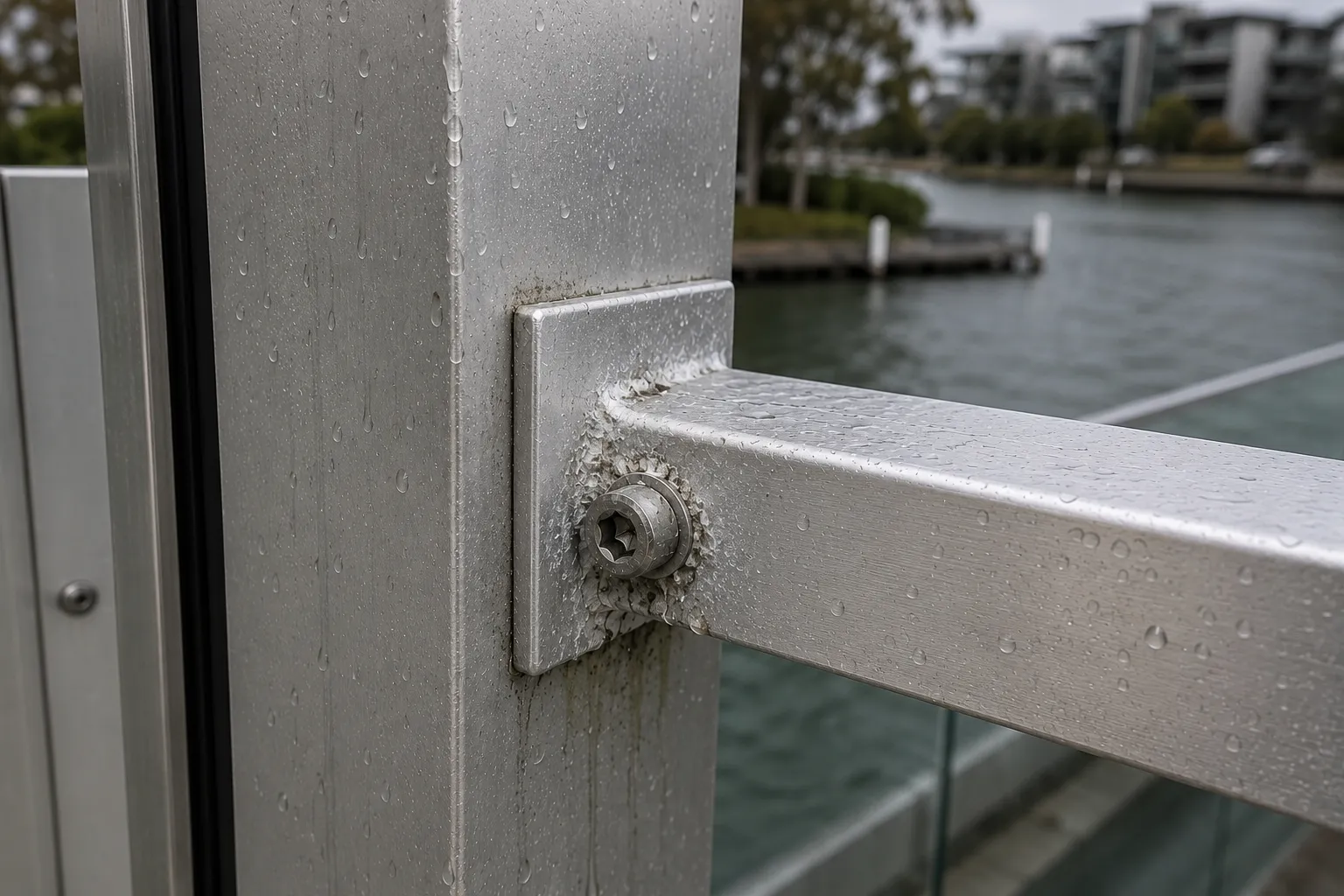
Galvanic corrosion occurs when aluminium is electrically connected to a different metal in the presence of an electrolyte such as water. Aluminium naturally develops a thin oxide film that provides a degree of passive protection, but corrosion can accelerate when it is connected to a more noble metal and a conductive path allows the galvanic reaction to occur. The Australian Aluminium Council explains that galvanic or dissimilar-metal corrosion is influenced by the metals’ positions in the galvanic series, the conductivity of the electrolyte and their relative surface areas.
In practical terms, galvanic corrosion requires three main conditions:
- Two electrically connected dissimilar metals
- A sufficient difference in electrochemical potential between the metals
- An electrolyte, usually moisture, rainwater, condensation or saltwater
Removing or controlling any one of these conditions can significantly reduce the likelihood and severity of galvanic attack.
Dissimilar Metals and the Galvanic Series
The galvanic series ranks metals according to their electrochemical behaviour within a particular environment. Aluminium is relatively active compared with many metals commonly used in construction and fabrication.
Potentially problematic combinations can include aluminium in contact with:
- Stainless steel
- Copper and copper alloys such as brass and bronze
- Carbon steel or cast iron
- Other metals with a sufficiently different electrochemical potential
When aluminium is electrically connected to a more noble metal in a conductive environment, aluminium generally acts as the anode and corrodes preferentially, while the more noble material acts as the cathode.
The degree of risk does not depend on the metals alone. Their surface condition, coatings, relative areas and the environment all influence how severe the corrosion may become.
Presence of an Electrolyte and Environmental Factors
Galvanic corrosion requires an electrolyte that allows ionic movement between the metals. In building and fabrication applications, common sources include:
- Rainwater and condensation
- Saltwater or airborne salt deposits in coastal locations
- Polluted moisture containing salts or other conductive contaminants
- Water trapped in joints, cavities or behind fixings
The conductivity and duration of the moisture exposure can have a major effect on corrosion rates. Salt-contaminated water is particularly aggressive because dissolved salts increase conductivity.
Frequent wetting combined with slow drying can also create favourable conditions for galvanic corrosion. Crevices, lap joints, sheltered areas and poorly ventilated cavities may remain damp for longer than exposed surfaces, allowing galvanic activity to continue.
Temperature, pH and contamination can further influence corrosion behaviour. Marine and industrial environments therefore often require greater attention to material compatibility, coatings, drainage and isolation.
Design Details and Contact Area
The way dissimilar metals are arranged can be just as important as the metals themselves.
One of the most significant considerations is the relationship between the anodic aluminium area and the cathodic area of the more noble material. A relatively small area of aluminium connected to a large area of a more noble metal can create an unfavourable condition because corrosion current becomes concentrated over the smaller aluminium surface.
Direct metal-to-metal contact without suitable isolation also creates an electrical pathway. If moisture reaches the connection, galvanic corrosion may develop.
Other design and installation factors that can increase the risk include:
- Damaged or incomplete protective coatings
- Exposed aluminium around drilled or cut edges
- Missing or deteriorated gaskets and isolating washers
- Moisture trapped behind brackets or cladding components
- Poorly designed joints that cannot drain or dry effectively
Careful detailing can substantially reduce these risks before the system is installed.
Which Metals and Conditions Present the Greatest Risk?
Not every combination of aluminium and another metal creates the same level of concern. The severity of galvanic corrosion depends on the electrochemical relationship between the materials, their relative surface areas, the presence of moisture and the conditions in which the assembly is used.
Understanding these variables can help architects, fabricators and builders make better decisions about fasteners, interfaces, protective coatings and drainage.
Higher Risk Metal Pairings With Aluminium
Copper and copper alloys can create a significant galvanic corrosion risk when placed in direct electrical contact with aluminium, particularly in wet or coastal environments.
Copper-containing runoff can also cause problems without a conventional mechanical connection. For example, water flowing from copper roofing or flashing onto an aluminium surface may carry copper compounds that contribute to localised corrosion.
Stainless steel can also form a galvanic couple with aluminium, particularly when the stainless steel is in its passive condition and moisture or salts are present. Stainless steel fasteners are commonly used in construction, but appropriate isolation, coatings and detailing may be required where they are installed through aluminium components.
Bare carbon steel and cast iron may also contribute to galvanic attack depending on their condition, coatings and the surrounding environment.
Zinc-coated or galvanised components may present a lower galvanic driving force in some conditions than more noble materials such as copper or passive stainless steel, but compatibility still depends on the specific environment and detailing. Wet, polluted or salt-laden conditions can increase the likelihood of corrosion even where the potential difference is comparatively lower.
Environmental Conditions That Accelerate Attack
Environmental exposure plays a major role in determining whether a mixed-metal assembly experiences significant galvanic corrosion.
Higher-risk conditions include:
- Persistent moisture
- Saltwater or airborne marine salts
- Industrial contamination
- Polluted urban environments
- Trapped water in crevices or lap joints
- Areas that remain sheltered and dry slowly
Coastal sites require particular attention because salt deposits increase the conductivity of moisture on surfaces. Selecting suitable aluminium for coastal construction also requires careful consideration of the alloy, protective finish, fixings and expected maintenance conditions. Aluminium used with stainless steel components near the coast, for example, may require more effective isolation and maintenance than the same assembly installed in a dry inland environment.
Sheltered locations under washers, behind brackets or within poorly ventilated joints can sometimes experience more severe corrosion than surrounding exposed surfaces because moisture remains trapped for longer.
Installation Details That Increase Risk
Even when the materials themselves are suitable for the application, poor detailing can create localised corrosion problems.
Risk can increase where:
- A large cathodic metal area is connected to a comparatively small aluminium area
- Direct metal-to-metal contact occurs without appropriate isolation
- Protective coatings are damaged around cut edges, holes or fasteners
- Water is allowed to collect around dissimilar metal connections
- Sealants, washers or gaskets deteriorate and expose the underlying metals
Using non-conductive washers, sleeves, gaskets or other compatible isolating materials can help interrupt electrical contact between dissimilar metals. Joints should also be designed so that moisture can drain and surfaces can dry.
How to Identify Galvanic Corrosion and Assess the Damage
Identifying galvanic corrosion on aluminium early can help prevent more extensive deterioration and reduce the need for major remediation.
Unlike the naturally occurring oxide layer that forms on aluminium, galvanic corrosion is often localised around connections, joints, fasteners or areas exposed to runoff from another metal.
Visual Signs to Look For
The first indication of galvanic corrosion is often a change in the appearance of the aluminium around a connection or joint.
Potential signs include:
- White or grey powdery corrosion products
- Localised pitting or small cavities in the aluminium surface
- Staining or discolouration near fixings
- Blistering or lifting of protective coatings
- Deterioration concentrated around joints or contact points
Corrosion products may accumulate within recesses or crevices, while pitting can appear as small depressions in the aluminium surface.
Drainage paths and horizontal surfaces should also be checked because moisture and contaminants can collect in these locations. Particular attention should be given to areas around dissimilar metal fixings and sheltered joints that remain damp.
Checking Whether the Damage Is Structural
Once galvanic corrosion has been identified, it is important to determine whether it is limited to the surface or has resulted in meaningful loss of aluminium.
Important factors include:
- The depth and extent of pitting
- Loss of material around bolts, rivets or brackets
- Deterioration near edges, welds or other critical connections
- Distortion, cracking or loosening of components
- Evidence that corrosion extends behind visible surfaces
Minor staining or superficial corrosion does not necessarily mean that the component has lost significant strength. However, deep pitting or measurable section loss around structural connections can affect performance.
Suspected structural damage should not be assessed by aggressively probing, scraping or otherwise damaging the aluminium. Where significant section loss, cracking, loosened connections or deep corrosion is visible, the component should be assessed by an appropriately qualified professional.
When to Involve Testing and Specialists
Visual inspection provides a useful initial indication of corrosion, but some deterioration may develop in areas that are difficult to access.
For structural framing, façade systems, curtain wall connections, marine components and other safety-critical applications, further investigation may be required.
Different non-destructive testing methods have different purposes. Ultrasonic thickness measurement may be used to assess remaining material thickness in suitable components, while dye penetrant inspection can assist with identifying surface-breaking cracks or other discontinuities.
Where there is uncertainty about residual strength or hidden deterioration, consultation with a structural engineer, corrosion specialist or other appropriately qualified professional may be appropriate. They can determine whether further testing, repair, improved isolation or replacement is necessary.
How to Prevent Galvanic Corrosion in Aluminium Projects
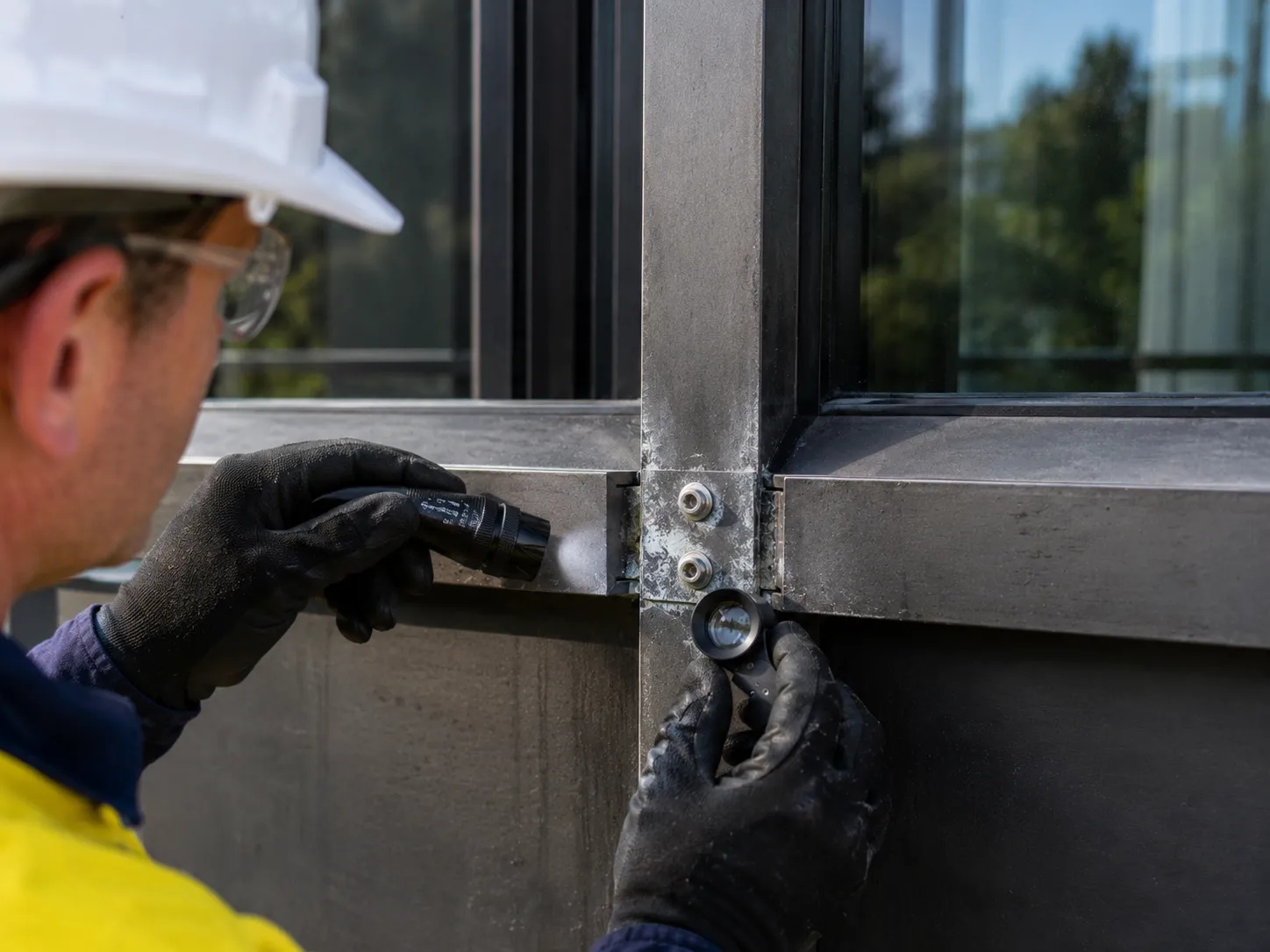
Preventing galvanic corrosion is primarily a matter of good material selection, detailing, isolation and moisture management.
Addressing these factors during design and fabrication is generally more effective than trying to correct corrosion after installation.
Choose Compatible Metals and Finishes
Material compatibility should be considered before components are fabricated or installed.
Where possible, avoid placing aluminium in direct electrical contact with metals that can create a significant galvanic potential in the expected environment, particularly where the assembly will frequently become wet.
Where mixed-metal connections are necessary, appropriate isolation and protective systems should be incorporated into the design.
The aluminium alloy and finish should also be selected according to the intended exposure conditions. Choosing the right aluminium grade helps align corrosion resistance, structural performance and workability with the project’s specific environment. Properly specified anodised or powder-coated finishes can provide an additional barrier between aluminium and the surrounding environment.
For coastal, marine or industrial applications, aluminium alloys and protective finishes should be selected specifically for the expected environmental exposure rather than relying on broad descriptions such as "marine grade".
Fasteners should also be chosen as part of the complete connection design. Their material, coating, mechanical requirements and compatibility with the aluminium should all be considered. Where dissimilar fasteners are necessary, suitable isolation may be required.
Electrically Isolate Dissimilar Metals
Where two potentially incompatible metals need to be used together, breaking the electrical pathway between them can significantly reduce galvanic corrosion.
Suitable isolation methods may include:
- Non-conductive gaskets
- Nylon or polymer washers
- Insulating sleeves or bushings
- Compatible plastic spacers
- Continuous isolating membranes or coatings
The appropriate system will depend on the connection, environmental exposure and structural requirements.
Sealants may provide additional protection against moisture but should not necessarily be relied upon as the only method of electrical isolation. Sealants can deteriorate, shrink or lose adhesion over time.
Physical isolation combined with effective sealing, drainage and protective coatings generally provides a more robust solution.
Any cutting, drilling or fabrication carried out after aluminium has been coated can expose bare metal. Where required by the coating system, exposed areas should be treated in accordance with the relevant manufacturer's repair recommendations.
Control Water Retention and Exposure
Because moisture acts as the electrolyte in most building-related galvanic corrosion, good drainage is an essential part of corrosion prevention.
Joints and interfaces should be designed to shed water rather than trap it. Where appropriate, this may involve:
- Avoiding unnecessary horizontal ledges and cavities
- Providing suitable drainage paths
- Incorporating weep holes into compatible framing systems
- Preventing water from pooling around fasteners
- Ensuring enclosed areas can dry effectively
Drainage should also be designed so that runoff from copper or other incompatible materials does not flow directly onto aluminium surfaces.
In coastal areas, airborne salt deposits can further increase galvanic corrosion risk. Appropriate coating systems, effective isolation and regular cleaning of exposed aluminium with fresh water where recommended can help control salt accumulation.
Regular inspection and maintenance complete the prevention strategy. Early staining, coating deterioration or pitting around fixings may indicate that isolation or drainage is no longer performing as intended.
What to Do If Galvanic Corrosion Has Already Developed
Once galvanic corrosion is identified, the response should address both the visible damage and the conditions that allowed the corrosion to develop.
Simply cleaning staining from aluminium without correcting the metal contact, moisture source or failed protective system is unlikely to provide a lasting solution.
Identify and Isolate the Galvanic Pair
The first step is to identify which materials are involved and determine how moisture is reaching the affected area.
Potential causes may include:
- Dissimilar metal fasteners
- Steel brackets
- Copper components
- Damaged coatings
- Failed isolating washers or gaskets
- Water runoff from another metal surface
- Persistent moisture within joints
Where practical, the electrical pathway between the metals should be interrupted using an appropriate isolation system.
This may involve installing compatible washers, sleeves, bushings or gaskets, replacing unsuitable components, restoring protective coatings or redesigning the detail to prevent direct contact.
The source of moisture should also be addressed. Improving drainage and allowing connections to dry can significantly reduce continued galvanic activity.
Assess the Extent of Damage
Once the affected area can be inspected, the severity of the corrosion should be evaluated.
White or grey corrosion products, staining and minor surface pitting may indicate relatively early deterioration. Deeper pits, significant loss of material, cracking, deformation or corrosion around critical connections can indicate more serious damage.
Where load-bearing components, façade connections, structural framing or other safety-critical elements are affected, significant corrosion should be professionally assessed before repairs are carried out.
Depending on the application, non-destructive testing or measurement of remaining material thickness may be necessary.
Components with severe section loss may need to be replaced rather than repaired.
Clean, Repair and Restore Protection
After the source of galvanic corrosion has been corrected and the condition of the component assessed, affected surfaces can be prepared for repair.
The exact repair method should follow the requirements of the aluminium alloy, existing finish and coating manufacturer.
Typical steps may include:
- Removing loose corrosion products using methods suitable for aluminium
- Cleaning the surface with a manufacturer-approved cleaner compatible with aluminium
- Thoroughly rinsing and drying the area where required
- Preparing the surface according to the repair coating specification
- Applying an appropriate aluminium pretreatment, primer and compatible protective coating
Strong alkaline or otherwise aggressive cleaning products should not be used unless they are specifically approved for the aluminium system, as unsuitable cleaners can attack the metal or damage existing finishes.
Anodising should also not be treated as a simple on-site coating repair. It is an electrochemical finishing process that is normally carried out under controlled manufacturing conditions. Repair of damaged anodised surfaces should therefore follow the recommendations of the product or finish manufacturer.
When the assembly is reassembled, appropriate isolation should be restored between dissimilar metals, particularly around fasteners and joints exposed to moisture.
Ongoing inspections can then help identify early deterioration of coatings, seals, isolating components or drainage systems before significant corrosion develops.
Protecting Aluminium From Galvanic Corrosion
Galvanic corrosion can affect the appearance, durability and structural performance of aluminium when dissimilar metals, moisture and unsuitable detailing occur together.
However, the likelihood and severity of corrosion can be significantly reduced through careful material selection, effective isolation between metals, appropriate protective finishes and design details that prevent water from becoming trapped around joints and fixings.
Regular inspection is equally important, particularly in coastal, industrial and other demanding environments where corrosion can progress more quickly. Early signs such as staining, pitting or coating deterioration should be investigated before more serious material loss develops.
For architects, builders and fabricators sourcing aluminium for long-term applications, Extal can provide aluminium products suited to a wide range of building and fabrication requirements. By considering corrosion risks from design and material selection through to installation and ongoing maintenance, aluminium systems can achieve better durability, appearance and long-term performance.

