
Straight aluminium sections do not always produce a straight assembly once welding is complete. Even accurately cut components can end up with a frame that rocks on a flat surface, mounting holes that no longer align or joints that have shifted out of position. This movement can develop during fabrication without indicating a fault in the original material.
For businesses planning aluminium fabrication in Sydney, understanding why distortion occurs helps prevent costly fitting and alignment problems. Extal supplies aluminium products for projects where section selection and material suitability matter. Knowing how heating, cooling, section thickness and weld placement affect the finished assembly can help buyers make decisions before material is ordered and production begins.
Why Does My Aluminium Assembly Move as Welds Cool?
Welding heats a small part of an assembly much more intensely than the surrounding material. Because those areas cannot expand and contract freely, the finished component can retain internal stresses and change shape as it cools.
Aluminium welding distortion is influenced by uneven temperatures, material restraint and joint arrangement, not simply the total amount of heat entering the metal. Two assemblies made from the same sections can move differently depending on their geometry and fabrication sequence.
Uneven Heating and Cooling Create Uneven Shrinkage
Aluminium expands as it heats and contracts as it cools. During welding, however, the entire component does not reach the same temperature at the same time. The hot joint area is attached to cooler material that restricts its movement.
As the weld solidifies and the heated region cools, contraction pulls against the surrounding metal. Some of this interaction remains as internal stress, while some appears as visible changes in shape, including bends, angular changes at joints or twists across the assembly.
Consider a rectangular frame assembled from straight sections. Its individual members may meet the specified dimensions before welding, yet contraction around the corner joints can alter the frame's diagonals. The frame may still be close to its intended length and width while failing to sit flat.
The resulting movement cannot be reliably predicted from frame size alone. Section shape, joint fit, restraint and the distribution of welding all influence how the assembly responds. A fabricator assesses these factors together rather than assuming a standard amount of movement for every project.
Joint Position Can Turn Local Shrinkage Into Bowing or Twisting
Where contraction occurs matters as much as its existence. If welds are concentrated on one side of a member, contraction can pull that side differently from the opposite side. The result may be bowing rather than a simple reduction in overall length.
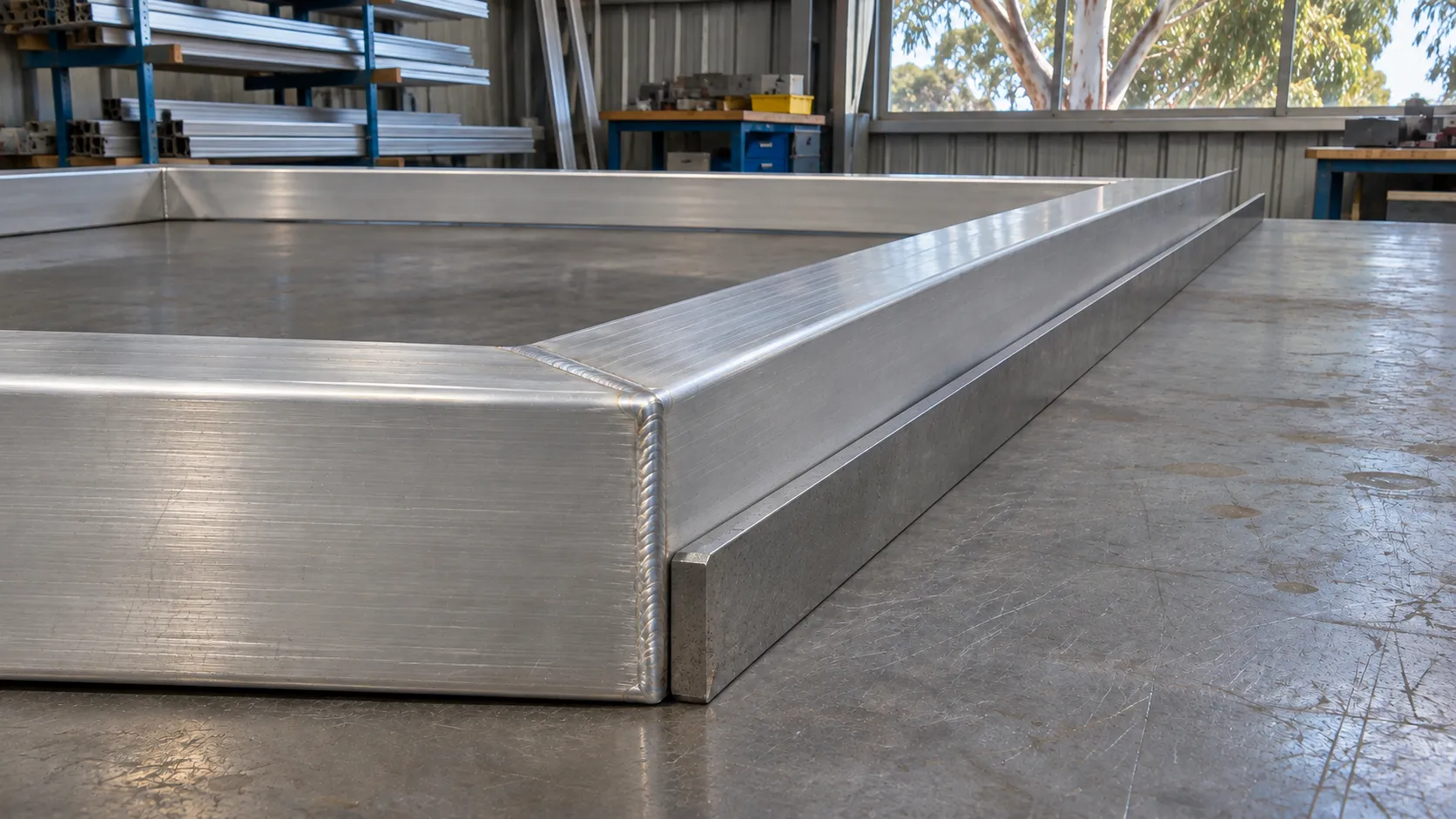
On an asymmetrical assembly, local movement at one connection can also affect other joints. A small rotation where two members meet may shift a mounting surface farther along the frame. This is why checking only the immediate weld area can miss a functional alignment problem.
Fabricators can manage some of these effects through suitable assembly and welding techniques. Depending on the design, tack welding can help hold components in position before final welding, while a balanced welding sequence can distribute heat and reduce uneven contraction. Appropriate fixtures and restraints may also help maintain alignment during production.
However, these methods need to suit the assembly's geometry and material. Excessive restraint or an unsuitable welding sequence can introduce other problems, so the approach should be determined by the fabricator rather than applied as a universal solution.
Identify fabrication movement from a condition already present in the supplied material. Checking and recording incoming straightness, twist and relevant dimensions provides a baseline for comparison after welding. Measurements should use agreed reference surfaces and a consistent support arrangement. This helps establish whether movement occurred during fabrication without automatically attributing the problem to the material or welding process.
Design Choices That Influence Distortion
The design of an aluminium assembly affects how heat spreads and how strongly the surrounding material resists movement. Thickness matters, but it cannot be assessed separately from section shape, joint arrangement and material condition.
Simply making every member heavier or asking for more weld is not a dependable solution. Either change can introduce additional fabrication demands without resolving the source of distortion.
Thin Sections and Unequal Thicknesses Respond Differently
Thin sections offer less resistance to local bending than heavier sections of comparable geometry. This can make uneven contraction more noticeable. However, a shaped section may resist movement quite differently from a flat strip of the same thickness.
Connections between unequal thicknesses need attention. The adjoining parts absorb and distribute heat differently, while their stiffness also varies. The thinner member may respond more visibly even though both parts contribute to the behaviour of the joint.
Section geometry also influences how an assembly performs under welding conditions. Wall thickness, unsupported spans, profile shape and connection positions should be considered together when selecting aluminium products. A section that works well for one application may not provide the same dimensional stability in a different assembly.
Understanding how aluminium extrusion works provides useful background when comparing profile shapes and wall thicknesses.
Increasing thickness changes weight, joint requirements and how heat moves through the component. It does not eliminate contraction. Before recommending a change, the fabricator should assess the complete section geometry and intended application.
Weld Placement and Joint Layout Affect the Finished Shape
A joint positioned away from the centre of a section can create an unbalanced contraction effect. Likewise, a series of connections along one face may encourage movement in a particular direction. The design question is not simply whether the parts can be joined, but how their connections influence the surfaces that must remain aligned.
More welds are not automatically better. Additional welding can introduce more heat and contraction, so specifying weld extent beyond what the design requires can work against dimensional control.
Where appropriate, a fabricator may use a balanced welding sequence, suitable tack positions and fixtures to help control movement. The correct approach depends on joint access, component geometry and the required finished dimensions.
Weld size and extent should be established by the designer and fabricator, with a qualified engineer involved wherever structural performance is affected. Changes to load-bearing details should never be treated as workshop adjustments made solely to improve appearance or straightness.
For assemblies forming part of a structure, SafeWork NSW’s guidance on design responsibilities for structures explains why proposed changes and safety concerns should be discussed with the responsible designer.
Material Condition Matters Beyond the Alloy Name
The alloy designation does not describe every relevant aspect of the supplied material. Temper, product form and prior processing can influence its properties and response to fabrication. These details should be clear in the material specification rather than left to assumption.
Choosing the right aluminium grade for your project involves considering fabrication requirements alongside strength, corrosion resistance and availability.
Dimensional distortion is also different from changes in properties near a weld. An assembly can remain visually straight while the heat-affected region has different properties from the original material. Conversely, visible movement alone does not establish if the finished component has adequate strength.
Where structural performance matters, an engineer must consider the welded condition rather than relying only on the properties quoted for unwelded aluminium. Material selection should account for the intended application and fabrication process, not just the alloy name or supplied dimensions.
What Should I Resolve Before Ordering Material for Welding?
Before buying aluminium, establish what the completed assembly must do and which dimensions control its function. A drawing that specifies cut lengths but leaves finished flatness or alignment undefined can create uncertainty once welding begins.
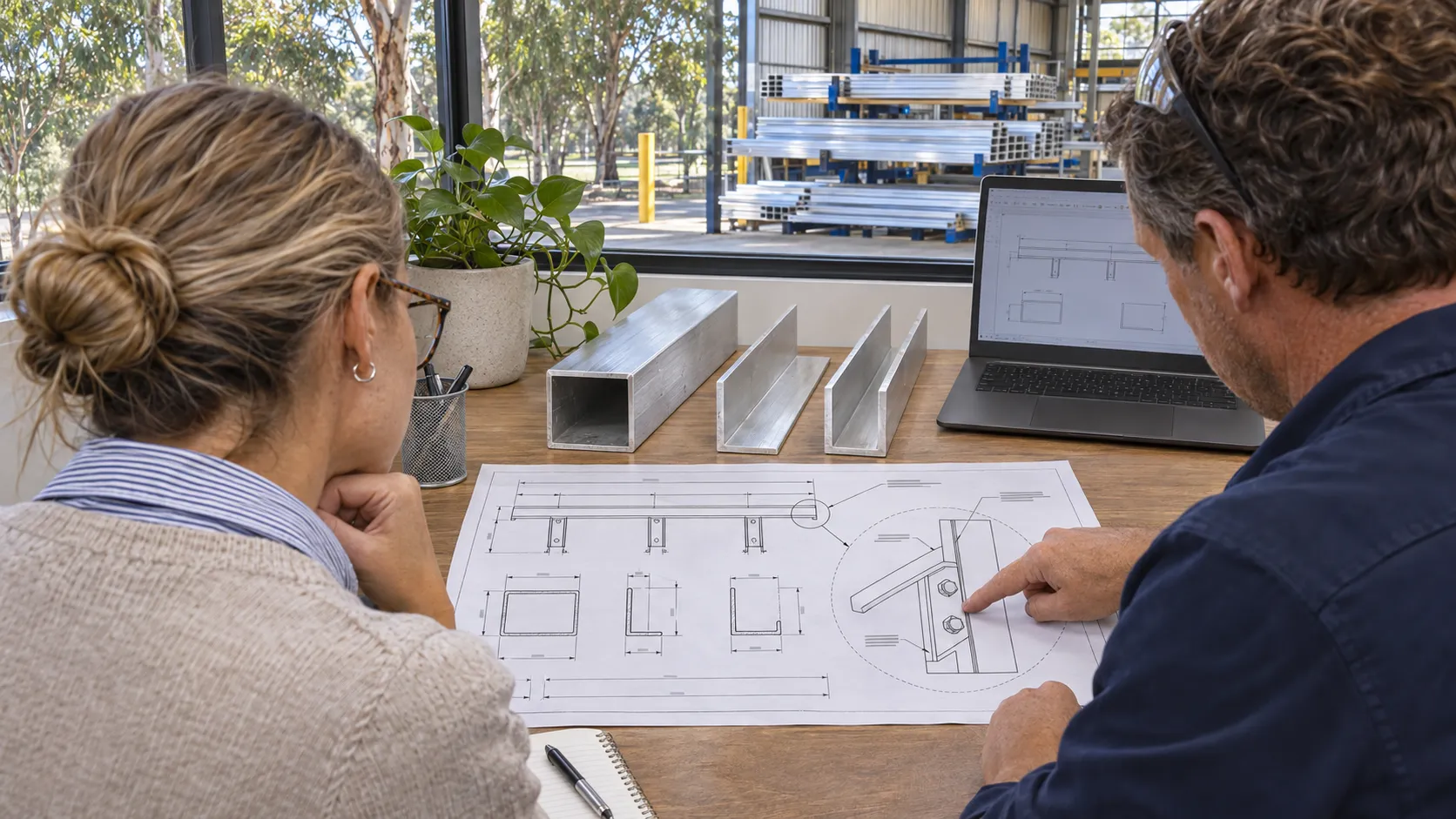
The useful distinction is between material requirements and finished assembly requirements. The supplier needs a clear material specification, while the qualified fabricator needs an agreed basis for assessing the welded result.
The Australian Aluminium Council’s Australian aluminium technical references identify relevant material, structural and welding standards. Confirm which apply to your project with the supplier, fabricator and engineer where required.
Agree on the Dimensions That Matter After Fabrication
Start with how the assembly connects to its surroundings. A mounting face may need to sit against another component, two bearing locations may need alignment, or a frame may need to fit within a defined opening. These functional requirements should determine which dimensions receive the closest control.
Agree on reference faces, measurement locations and acceptable finished variation before production. Also clarify whether measurements apply to the free-standing assembly or to a component held in its intended installation arrangement. Otherwise, different inspection methods can produce conflicting results.
When comparing aluminium suppliers in Sydney, use the specification agreed with your fabricator to discuss material availability and supplied condition. Do not assume that a supplier's material tolerances also describe what a separate welded assembly will achieve.
Allow for Finishing and Any Necessary Machining
If a finished face needs tighter control than welding alone can reasonably deliver, discuss if machining after welding is appropriate. This decision should happen before material purchase because it may affect section choice, available machining allowance and access to the relevant surfaces.
Machining is not a universal cure for distortion. Removing material can change the balance of residual stresses, so the proposed sequence needs assessment by the fabricator and machining specialist. Critical dimensions should be checked at the stage that reflects how the component will actually be delivered and used.
Any specified finishing process also belongs in this discussion. Its position in the production sequence can affect access, surface condition and when final inspection should occur. Corrective work, if needed, should be assessed and undertaken by professionals rather than attempted through improvised straightening.
Use a Trial Assembly When Repeat Production Magnifies Risk
A trial assembly is useful when an unfamiliar joint layout, demanding fit requirement or repeated production run makes uncertainty costly. It allows the fabricator to compare the actual cooled geometry with the intended result before the same assumptions are repeated across multiple components.
For the trial to be informative, its material condition, joint details and production approach must represent the proposed production run. Agree on which dimensions will be recorded and how any changes will be reviewed.
If the trial reveals unacceptable movement, resolve the design or fabrication approach with the experts before releasing the remaining material into production. This can identify problems early and reduce the risk of repeated components failing to meet their required dimensions.
Plan Aluminium Fabrication Around the Finished Result
Aluminium distortion after welding is influenced by several connected factors, including uneven heating, section geometry, joint placement and material condition. Although some movement is an expected consideration in welding, suitable design decisions and fabrication planning can manage its effect on the finished assembly.
Discussing section suitability, material specifications and finished dimensions before ordering can make production more predictable. Extal help buyers explore its aluminium product range and discuss material requirements for their projects. Working with a qualified fabricator and confirming expectations early helps ensure the selected material is suitable for the intended application.

